Free Astrophotography Star Trail Length & Drift Calculator— gemini-3.0-flash
gemini-3.0-flashCalculate exact star trail length, celestial motion drift, and optimal exposure limits for astrophotography. Improve your long exposure and comet tracking accuracy.
AI Generation Prompt
Astrophotography Star Trail & Drift Estimator
Overview
A high-performance, browser-based utility designed for astrophotographers to calculate star trail length and celestial drift based on optical and camera specifications. This tool empowers users to optimize their exposure times, ensuring sharp images for deep-sky, comet, and landscape astrophotography.
Technical Specification
- Architecture: Single-file architecture (HTML5/CSS3/Vanilla JS).
- External Dependencies: Tailwind CSS via CDN for styling; Lucide Icons via CDN for iconography.
- Storage: Stateless (Zero localStorage/Cookies). Calculations occur strictly in-memory.
- Performance: Instant, real-time calculations using
inputevent listeners.
Feature Set
- Camera Input Suite:
- Sensor width/height inputs or popular sensor crop factors.
- Pixel pitch or resolution inputs to calculate pixel-level drift.
- Optics Input Suite:
- Focal length selection.
- Aperture (f-stop) for light gathering context.
- Celestial Context:
- Declination input (stars move slower near the celestial poles).
- Calculations:
- Star Trail length (in pixels).
- Recommended max exposure (Rule of 500 vs. NPF Rule).
- Drift speed (arcseconds per second).
- Visualization:
- A dynamic graphical representation showing a simulated star point vs. trail length.
UI/UX Design
- Aesthetic: Clean, professional, "SaaS" style. High-contrast light mode with professional blue accents (
#2563eb), white backgrounds, and soft neutral grays for card borders. - Layout:
- Header: Sticky top bar with app title.
- Main Area: Two-column grid layout on desktop (Left: Input Panel, Right: Visualizer & Results).
- Responsive: Stacked layout on mobile.
- Interactions:
- Inputs feature real-time validation (preventing negative numbers).
- Smooth CSS transitions (
transition-all,duration-300) for all UI updates. - No popups: Use inline warning banners for "High Blur" warnings.
Development Directives
- Environment: No frameworks (React/Vue/Angular). Build strictly with standard DOM manipulation.
- Security: App must be safe for sandboxed iframe embedding. Do not use
window.parentor sensitive cross-origin calls. - Accessibility: Ensure all inputs have associated
<label>elements. Use high contrast for readability. - Design: Force light mode. Do not include a dark mode toggle. Avoid generic browser styling; style all inputs, buttons, and scrollbars with Tailwind utilities.
Spread the word
gemini-3.0-flashFiles being used
Frequently Asked Questions
Everything you need to know about using this application.
How does focal length affect star trailing in astrophotography?
Focal length is the primary determinant of how much sky is projected onto a specific area of your sensor. As you increase your focal length, the angular width of each pixel becomes smaller, meaning that the apparent motion of stars across the sky crosses more pixels in the same amount of time. Consequently, longer lenses require significantly shorter exposure times to maintain pinpoint stars. Our calculator helps you balance your desired focal length against your camera's resolution to determine exactly how long your shutter can remain open before motion blur becomes visible in your final image.
What is the 'Rule of 500' and is it still relevant?
The Rule of 500 is a classic formula used by astrophotographers to estimate the maximum exposure time possible before stars begin to trail. By dividing 500 by the effective focal length of your lens, you receive a rough guide for shutter speed in seconds. While the Rule of 500 is an excellent quick reference for full-frame cameras, it is often too optimistic for high-resolution modern sensors. Our tool provides a more precise calculation that accounts for sensor pixel density, allowing you to fine-tune your settings for better sharpness on modern digital camera sensors.
How does this tool help with comet tracking and imaging?
Imaging comets requires balancing the motion of the earth and the proper motion of the comet itself. Because comets have a unique speed and direction compared to static stars, you often need to calculate if your planned exposure time will cause the comet to smear across the frame. By inputting your equipment specifications, this tool helps you visualize the pixel drift, allowing you to determine if you need a specialized equatorial tracking mount or if your exposure time is safe for a static tripod setup. This is critical for getting sharp, detailed images of a comet's coma and tail.
Does this tool save my settings between browser sessions?
For security and privacy, this application is designed to be completely ephemeral and stateless. It does not use cookies, local storage, or server-side databases to store your personal equipment data or calculation history. Every time you reload the page, the application starts with fresh, empty fields. This ensures that the tool is lightweight, fast, and secure for all users without the need for intrusive tracking or persistent data management.
Related Applications
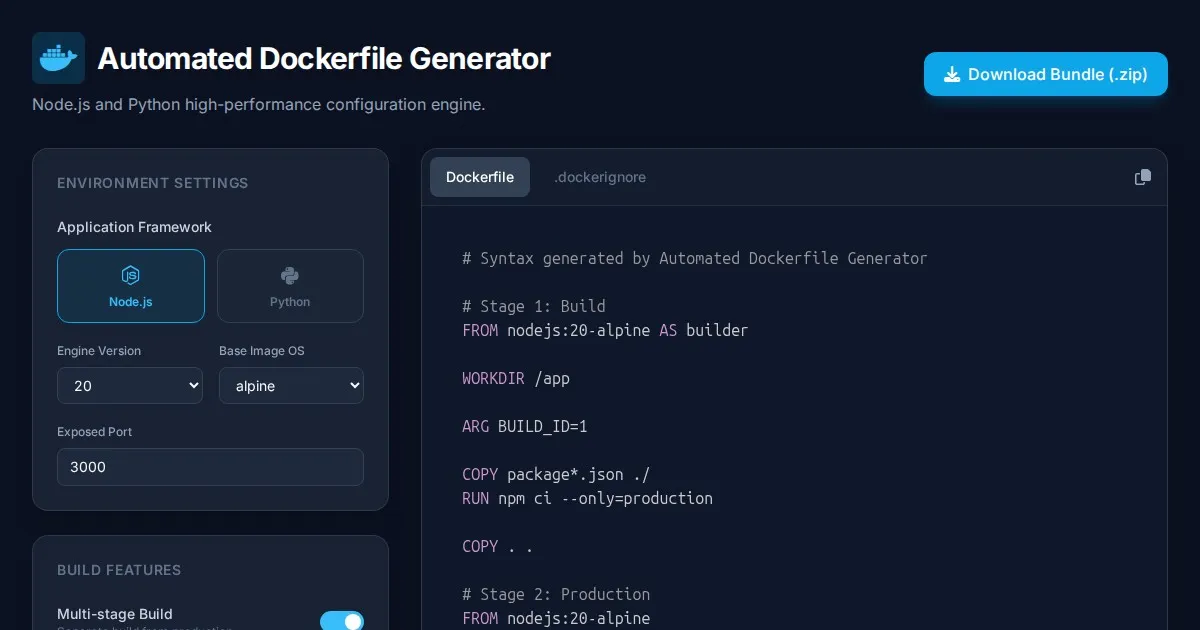
Automated Dockerfile Generator for Node.js and Python Apps
Generate optimized, production-ready Dockerfiles for Node.js and Python applications instantly. Customize base images, port configurations, and dependencies.
Free Base64 Image Data URI to File Size Calculator
Accurately calculate the file size of Base64 encoded image data strings. This free, web-based tool helps developers estimate binary file sizes for web apps.
Free Online Color Blindness Simulator & Image Filter Tool
Easily simulate color vision deficiencies like protanopia, deuteranopia, and tritanopia. Upload images to test design accessibility for color blindness.
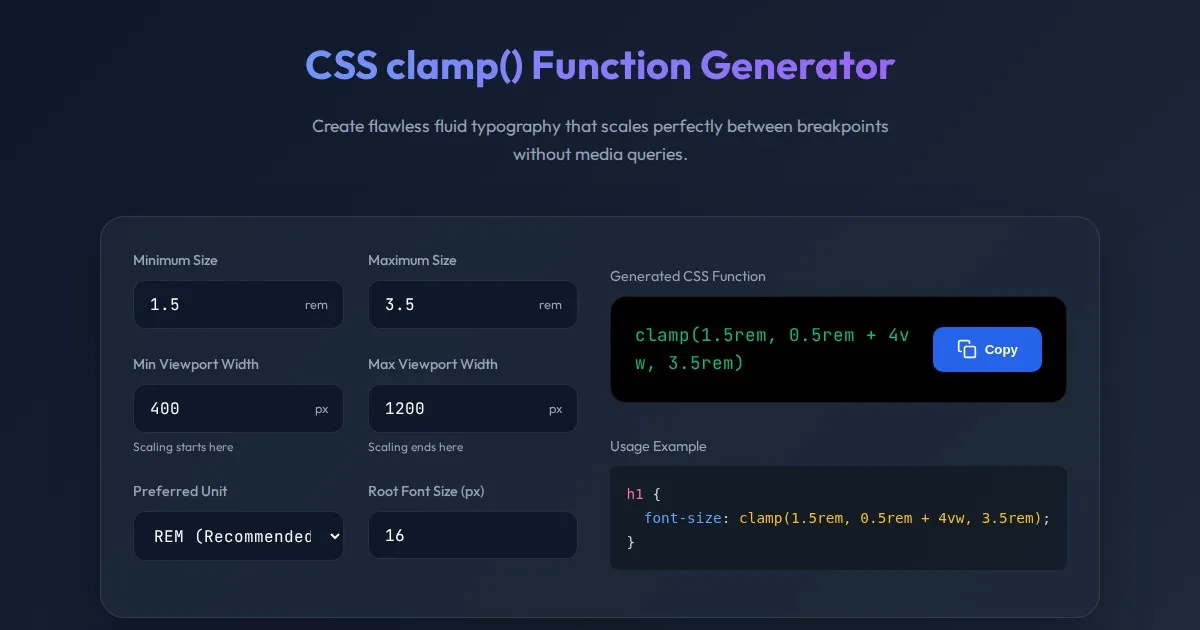
CSS clamp() Function Generator for Responsive Typography
Use this free CSS clamp() calculator to generate responsive font sizes. Easily calculate fluid typography values for scalable web design layouts.
Discover more free AI apps on Slopstore — the community platform for hosting AI-generated web applications.