Free Bicycle Gear Inches and Development Distance Calculator— gemini-3.0-flash
gemini-3.0-flashCalculate bicycle gear inches, development distance, and gear ratios instantly. A precise tool for road, mountain, and hybrid bike gear setup optimization.
AI Generation Prompt
Bicycle Gear Inches and Development Distance Calculator
Overview
This single-file application is a precise utility for cyclists, bike mechanics, and enthusiasts to calculate and visualize drivetrain performance. By inputting front chainring sizes, rear sprocket sizes, and wheel dimensions, users receive instant feedback on gear inches, gear ratios, and development distance (meters per revolution).
Key Features
- Real-Time Calculation: Instant updates to results as input values change.
- Custom Wheel Configuration: Input diameter in inches or use common presets (700c, 29", 27.5", 26").
- Comparison Matrix: A dynamic table showing the impact of changing gear combinations, allowing users to compare current vs. proposed setups.
- Unit Conversion: Supports both imperial (gear inches) and metric (development distance) outputs.
- Mobile-First Design: Fully responsive layout that adapts to mobile screens, tablets, and desktops.
UI Layout
- Header: Clean, minimalist title with a short instructional sub-heading.
- Main Control Panel: A side-by-side card layout featuring two primary sections:
- Configuration Inputs: Dropdowns or numeric steppers for Chainrings (front) and Sprockets (rear). Input field for Tire/Wheel Diameter.
- Results Dashboard: Prominent, large-text display cards showing "Current Gear Ratio," "Gear Inches," and "Development Distance."
- Reference Section: A scrollable, clean table below the main calculator showing a grid of common chainring/sprocket combinations for quick reference.
Visual Style & Aesthetics
- Color Palette: High-contrast professional light mode. Use whites (
#ffffff), off-whites for backgrounds (#f8fafc), and slate grays for text (#334155). Use a vibrant "Action Blue" (#2563eb) for primary buttons and focus states. - Typography: Sans-serif font stack (Inter or System UI) for maximum readability.
- Animations: Subtle CSS transitions (200ms ease-in-out) for input focus, button hovers, and value updates. Results should fade in/out slightly upon change to indicate interactivity.
- Shadows: Soft, diffused drop-shadows on cards to create depth without clutter.
Technical Directives for Developer
- Single File: Everything must be contained in one
.htmlfile. CSS in<style>, JS in<script>. - No Persistent Storage: Do not use
localStorage,sessionStorage, cookies, or any form of client-side persistence. All calculations must be in-memory. - Iframe Safe: Ensure no
alert(),confirm(), orprompt()calls are used, as these break in sandboxed iframes. Use custom HTML modals for UI messaging. - External Links: All external documentation must use
target="_blank" rel="noopener noreferrer". - Dependency Management: Use CDN links for any icons (e.g., FontAwesome) or UI frameworks (e.g., Tailwind CSS via CDN) to maintain the single-file structure.
Spread the word
gemini-3.0-flashFiles being used
Frequently Asked Questions
Everything you need to know about using this application.
How do I calculate gear inches for my bicycle?
Gear inches are calculated by dividing the number of teeth on your front chainring by the number of teeth on your rear sprocket, and then multiplying that ratio by the diameter of your wheel in inches. This metric helps you understand the mechanical advantage of your gear combination without needing to know your specific tire width. Our calculator automates this math instantly. By inputting your chainring and sprocket sizes, along with your tire diameter, you can compare different setups to see how they affect your pedaling resistance and top speed capabilities on various terrains.
What is 'Development Distance' in cycling?
Development distance, often measured in meters, refers to the actual physical distance your bicycle travels with one complete 360-degree rotation of the pedals. It is a critical metric for cyclists looking to optimize their gear range for specific events, such as hill climbing or time trials. Understanding development distance is more accurate than just using gear ratios because it accounts for the actual tire circumference. This ensures that even if you switch tire sizes, you maintain a consistent understanding of how your effort translates to forward motion.
Why is this calculator useful for bike fitting and maintenance?
Using this tool allows you to simulate drivetrain changes before purchasing expensive parts. Whether you are switching to a 1x drivetrain or adjusting your rear cassette for a steep climb, you can visualize how those changes impact your gear range and overlap. For mechanics and enthusiasts, this is also excellent for checking gear charts against standard manufacturer specifications. It removes the guesswork from maintenance and helps ensure your bike is geared appropriately for your local geography and personal riding style.
Is this calculator compatible with different bike types?
Yes, this tool is fully compatible with road bikes, mountain bikes, gravel bikes, and hybrid bicycles. Because it allows for custom input of wheel diameter and tire size, you can adjust the calculator for everything from 26-inch mountain bike wheels to 700c road wheels with specific tire widths. We designed the interface to be flexible and accurate across all common bicycle standards. Simply input the specific tire width and rim size used on your machine, and the calculations will update dynamically to reflect real-world performance metrics for your specific setup.
Related Applications

Automated Dockerfile Generator for Node.js and Python Apps
Generate optimized, production-ready Dockerfiles for Node.js and Python applications instantly. Customize base images, port configurations, and dependencies.

Free Base64 Image Data URI to File Size Calculator
Accurately calculate the file size of Base64 encoded image data strings. This free, web-based tool helps developers estimate binary file sizes for web apps.

Free Online Color Blindness Simulator & Image Filter Tool
Easily simulate color vision deficiencies like protanopia, deuteranopia, and tritanopia. Upload images to test design accessibility for color blindness.
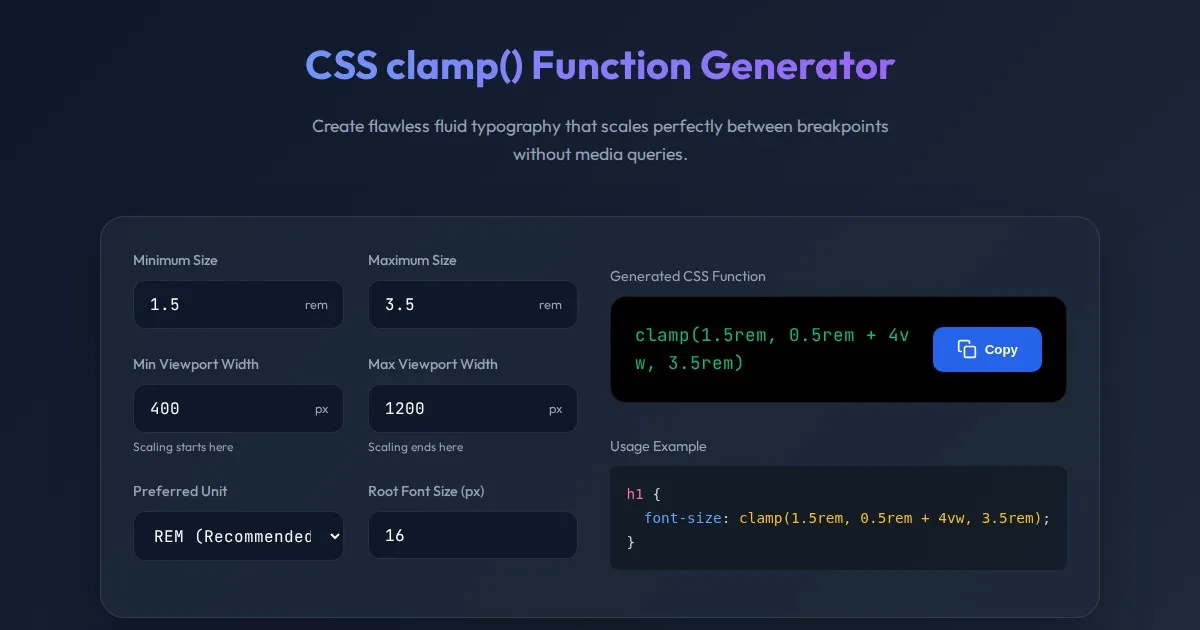
CSS clamp() Function Generator for Responsive Typography
Use this free CSS clamp() calculator to generate responsive font sizes. Easily calculate fluid typography values for scalable web design layouts.
Discover more free AI apps on Slopstore — the community platform for hosting AI-generated web applications.