Free Chainmaille Japanese 12-in-2 Weight & Material Calculator— gemini-3.0-flash
gemini-3.0-flashAccurately calculate weight, ring counts, and material requirements for Japanese 12-in-2 chainmaille projects. A professional, free tool for jewelry makers.
AI Generation Prompt
Chainmaille Japanese 12-in-2 Density & Weight Calculator
Overview
A specialized, high-precision utility for jewelry artists and chainmaille artisans. This tool estimates total ring counts, material volume, and total project weight for the Japanese 12-in-2 weave, allowing creators to plan their material purchases efficiently.
Features
- Dynamic Ring Calculator: Input custom project dimensions (width x height) to calculate total ring count for the 12-in-2 pattern.
- Material Density Selector: Pre-configured database of common jewelry metals (Sterling Silver, Copper, Brass, Bronze, Gold, Aluminum) with auto-calculated density values.
- Wire Gauge Support: Standard AWG to Metric conversion for inputting ring specifications.
- Instant Results: Results update in real-time as inputs change via CSS transitions and JS observers.
- Summary Export: Simple button to copy the project summary to the clipboard.
UI Layout
- Header: Clean, centered title with a brief subtitle explaining the tool's purpose.
- Main Tool Area:
- Left Column: "Project Specifications" (Input fields with clean, floating labels).
- Right Column: "Calculated Results" (Displaying Total Rings, Estimated Weight, and Volume Metrics).
- Style: Modern, clean "SaaS" aesthetic. Large, readable inputs, plenty of white space, and subtle, rounded card containers.
Visual Design & Interaction
- Color Palette:
- Primary: Professional Slate (#2D3748) for text.
- Accents: Soft Indigo (#5A67D8) for interactive buttons.
- Backgrounds: Off-white (#F7FAFC) for the body, pure white (#FFFFFF) for cards.
- Borders: Light gray (#E2E8F0) for dividers.
- Animations:
- Smooth hover states on input fields (border color fade).
- Subtle opacity transitions on results display when updating.
- No layout jumps: Use fixed-height containers to prevent content shifts.
Development Directives
- Architecture: MUST be a single HTML file containing all logic, structure, and styling.
- Constraint Compliance:
- NO Storage: Do not use
localStorage,sessionStorage, or cookies. Use only in-memory JavaScript variables. - NO External Dependencies: Use standard Tailwind via CDN (via script tag) or pure CSS. No frameworks (React/Vue/Angular).
- Compatibility: Ensure full responsiveness across desktop, tablet, and mobile.
- Iframe Safe: Do not trigger popups or external redirects. All interactions must occur within the single-page view.
- Accessibility: Use high-contrast font combinations and properly labeled form fields for screen readers.
- NO Storage: Do not use
Spread the word
gemini-3.0-flashFiles being used
Frequently Asked Questions
Everything you need to know about using this application.
What is the Japanese 12-in-2 chainmaille weave?
The Japanese 12-in-2 weave is a sophisticated and highly dense chainmaille pattern characterized by twelve rings passing through each central ring. It is widely prized in professional jewelry making and historical reenactment for its visual complexity and structural stability, often used in bracelets, necklaces, and armor accents. Because of its extreme density, calculating material requirements manually can be challenging. This tool simplifies the process by estimating the exact number of rings required based on your dimensions and calculating the total weight based on your selected material density.
How does the weight calculation work?
The calculator determines the total weight by first calculating the volume of the wire used in your project based on the ring count, the inner diameter (ID) of the rings, and the wire gauge (AWG). It then applies the specific density constant of the metal material you have selected—such as sterling silver, copper, or gold—to derive a precise weight estimate. By taking these physical parameters into account, the app provides a highly accurate estimate of how much raw material you need to purchase or process. This helps in budget planning and ensuring you do not under-order or over-order your precious metals.
Can I use this tool for other chainmaille weaves?
This specific utility is mathematically optimized exclusively for the Japanese 12-in-2 weave pattern. Other weaves, such as European 4-in-1 or Japanese 6-in-1, have vastly different ring density constants, which would result in inaccurate estimates if calculated using this tool's specific geometric algorithms. To ensure the highest accuracy for your jewelry projects, please use this calculator only for the 12-in-2 configuration. We focus on this specific weave to provide the most precise, specialized data for artisans who frequently work with this complex and beautiful design.
Why is my real-world weight slightly different from the estimate?
While this calculator uses standard industry formulas, small discrepancies may occur due to variations in wire manufacturing. Factors such as the actual thickness of the wire (which can deviate slightly from the nominal AWG rating), the purity of your metal alloy, and the tension of your rings can all influence the final weight of your piece. Additionally, ring closure quality can impact the overall weight and dimensions of the finished chain. We recommend always keeping a small buffer in your material orders to account for these minor variances and the possibility of accidental ring damage during the assembly process.
Related Applications

Free Base64 Image Data URI to File Size Calculator
Accurately calculate the file size of Base64 encoded image data strings. This free, web-based tool helps developers estimate binary file sizes for web apps.
Free Online 3D Model Viewer - GLTF & OBJ File Previewer
Instantly preview 3D models online with this free 3D Model Viewer. Support for GLTF, GLB, and OBJ formats. Drag and drop your files for a fast, browser-based render.

Free Online Color Blindness Simulator & Image Filter Tool
Easily simulate color vision deficiencies like protanopia, deuteranopia, and tritanopia. Upload images to test design accessibility for color blindness.
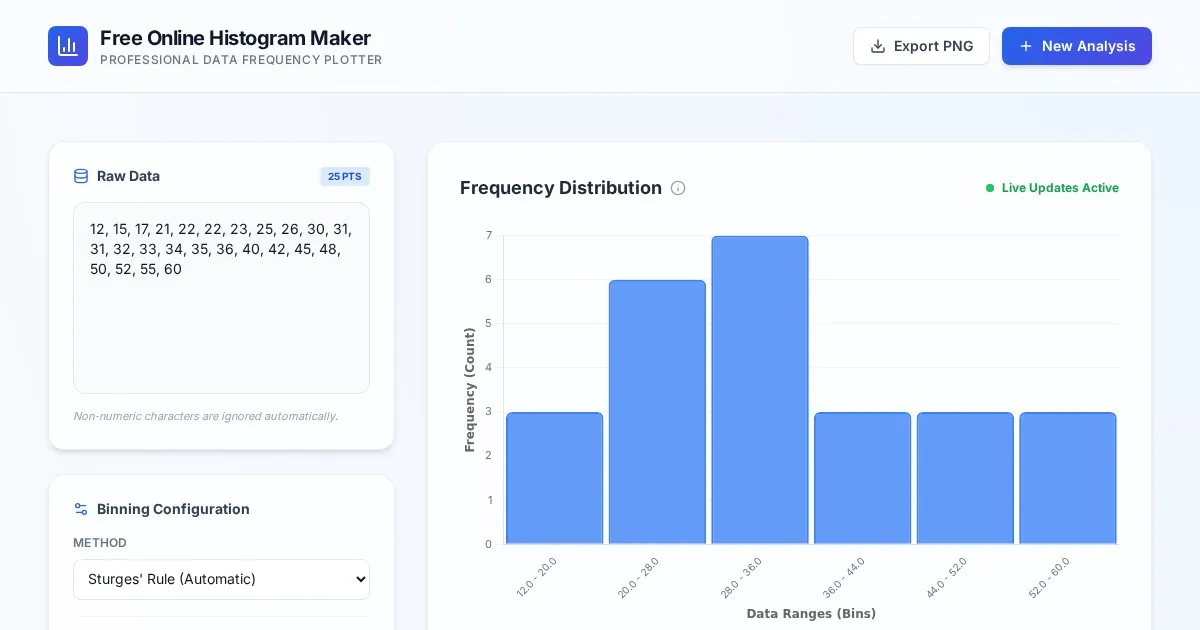
Free Online Histogram Maker & Data Frequency Plotter
Easily create professional histograms from your numeric data. Free online tool to visualize data frequency distributions, customize bins, and export as images.
Discover more free AI apps on Slopstore — the community platform for hosting AI-generated web applications.