Free Electrical Three-Point Saddle Conduit Bender Calculator— gemini-3.0-flash
gemini-3.0-flashAccurately calculate three-point saddle bend marks for electrical conduit installations. Professional-grade tool for electricians to determine obstacle clearance.
AI Generation Prompt
Professional Three-Point Saddle Conduit Bender
Overview
A precision-oriented, browser-based utility designed for professional electricians. This tool eliminates manual trigonometry during conduit installation by calculating exact mark placements for three-point saddle bends, reducing material waste and installation time.
Core Features
- Input Customization: Precision fields for Obstacle Height and Obstacle Width.
- Bend Angle Selection: Support for standard 22.5° and 30° bend angles.
- Dynamic Shrink Calculation: Automatically adjusts for conduit shortening caused by bending angles.
- Visual Diagram: A real-time, responsive SVG representation of the conduit showing the center mark and side marks.
- Unit Flexibility: Toggle between Imperial (inches) and Metric (millimeters) measurements.
- Zero-Storage Logic: Purely functional, memory-based calculations. No data is stored between sessions.
User Interface Design
- Layout: A clean, two-pane layout. The left column contains the input form and settings, while the right column (or bottom on mobile) displays the calculated results and visual diagram.
- Color Palette: Professional "Industrial Light" scheme.
- Primary: Steel Blue (#2563eb)
- Background: Crisp White (#ffffff)
- Surface: Soft Light Grey (#f8fafc)
- Text: Dark Slate (#1e293b)
- Accent: Success Green (#16a34a) for clear mark instructions.
- Typography: Sans-serif, geometric typeface (e.g., Inter or system UI font) for high readability in workshop environments.
Animations & Interactions
- Fade Transitions: Inputs and result cards fade in when values change.
- Micro-interactions: Subtle button hover effects and input focus states to guide the user.
- Real-time Updates: Calculations update instantly as the user types; no 'Calculate' button click is required.
Developer Directives
- Architecture: Must be a single, standalone HTML file containing all HTML, CSS, and JavaScript.
- Sandbox Safety:
- NO localStorage, sessionStorage, or cookies. Use local state variables only.
- NO
alert()orprompt(). All alerts/errors must be rendered within the DOM as custom styled modal elements.
- Responsive Design: Ensure a stacked mobile view (controls on top, results below) and a side-by-side desktop view. Use CSS Flexbox/Grid for layout.
- Third-Party Libraries: Minimal usage. Only use CDN links for essential assets like Tailwind CSS or lightweight vector icon libraries.
- Aesthetic: Maintain a high-end SaaS look—use whitespace, soft shadows (
box-shadow: 0 4px 6px -1px rgb(0 0 0 / 0.1)), and rounded corners (border-radius: 8px). - Strict Light Mode: Ensure the entire UI is strictly light mode; do not include a dark mode toggle or styles.
Spread the word
gemini-3.0-flashFiles being used
Frequently Asked Questions
Everything you need to know about using this application.
What is a three-point saddle bend in electrical conduit work?
A three-point saddle bend is a common technique used by electricians to allow a conduit run to bypass a small obstacle, such as a pipe or a structural beam, without needing to deviate the path around the object. It consists of a center bend and two smaller supporting bends. Achieving the correct measurements for these bends is critical to ensure the conduit fits snugly against the obstacle while maintaining structural integrity. Our calculator helps identify the exact center bend mark and the distance for the two outer side bends based on your obstacle measurements.
How do I use this electrical conduit saddle calculator?
To use the tool, first measure the height of the obstacle and the width of the object you need to clear. Enter these dimensions into the 'Obstacle Height' and 'Obstacle Width' input fields. Select your preferred bending angle, as this will significantly impact the 'shrink' or the amount of conduit length consumed by the bends. Once the inputs are submitted, the tool will automatically calculate the required center bend mark and the side bend marks. The results are displayed instantly, and the diagram updates to provide a visual reference, ensuring you make the correct marks on your pipe before you begin bending.
Why is it important to calculate shrink for saddle bends?
Shrink refers to the reduction in the overall length of the conduit caused by creating bends. Because the pipe takes a diagonal path over an obstacle rather than a straight path, the distance between the two ends of the conduit effectively 'shrinks' relative to the original straight-line length. If you do not account for this shrink, your conduit will be too short to reach your desired exit point, potentially wasting materials and time. Our calculator automatically applies the necessary compensation factors to ensure your conduit ends up at the correct total length after the three bends are applied.
Is this tool compatible with different conduit sizes?
Yes, this tool is mathematically compatible with standard conduit sizes, including EMT, Rigid, and IMC. Because the physics of the triangle created by a three-point saddle depends on the obstacle geometry and the bend angle, the math remains consistent regardless of the conduit diameter. While the diameter of the conduit may influence the type of bender head required, the placement of the marks (center and side) remains constant based on the geometry of the obstacle. Always ensure your bender is rated for the conduit size and wall thickness you are working with.
Related Applications
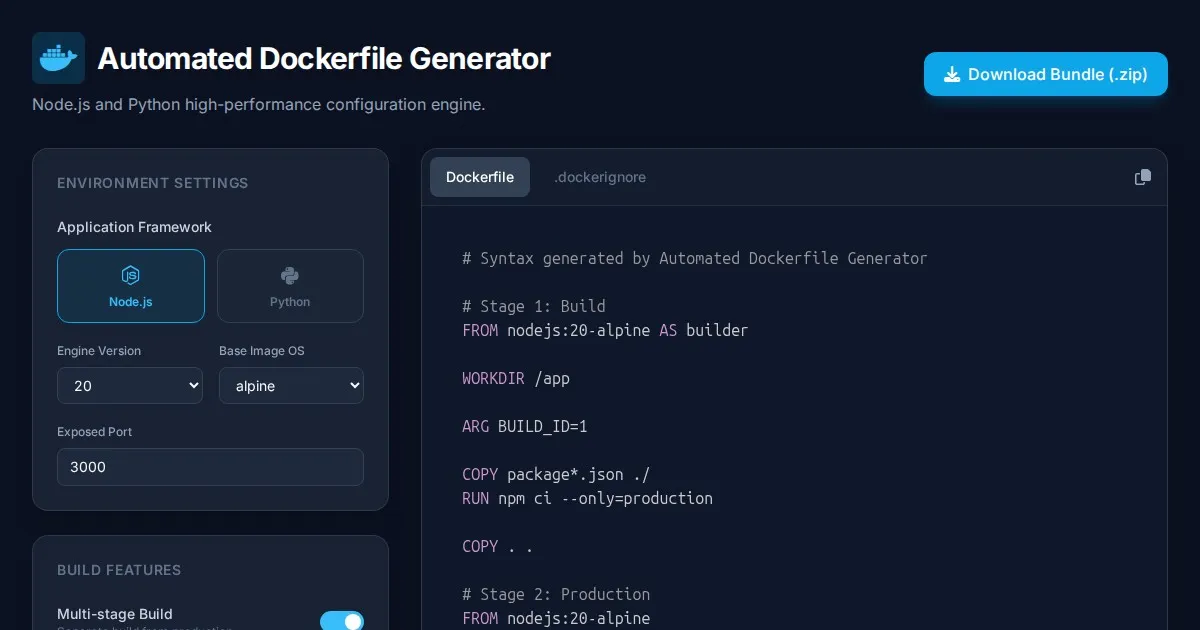
Automated Dockerfile Generator for Node.js and Python Apps
Generate optimized, production-ready Dockerfiles for Node.js and Python applications instantly. Customize base images, port configurations, and dependencies.
Free Base64 Image Data URI to File Size Calculator
Accurately calculate the file size of Base64 encoded image data strings. This free, web-based tool helps developers estimate binary file sizes for web apps.

Free Online Color Blindness Simulator & Image Filter Tool
Easily simulate color vision deficiencies like protanopia, deuteranopia, and tritanopia. Upload images to test design accessibility for color blindness.
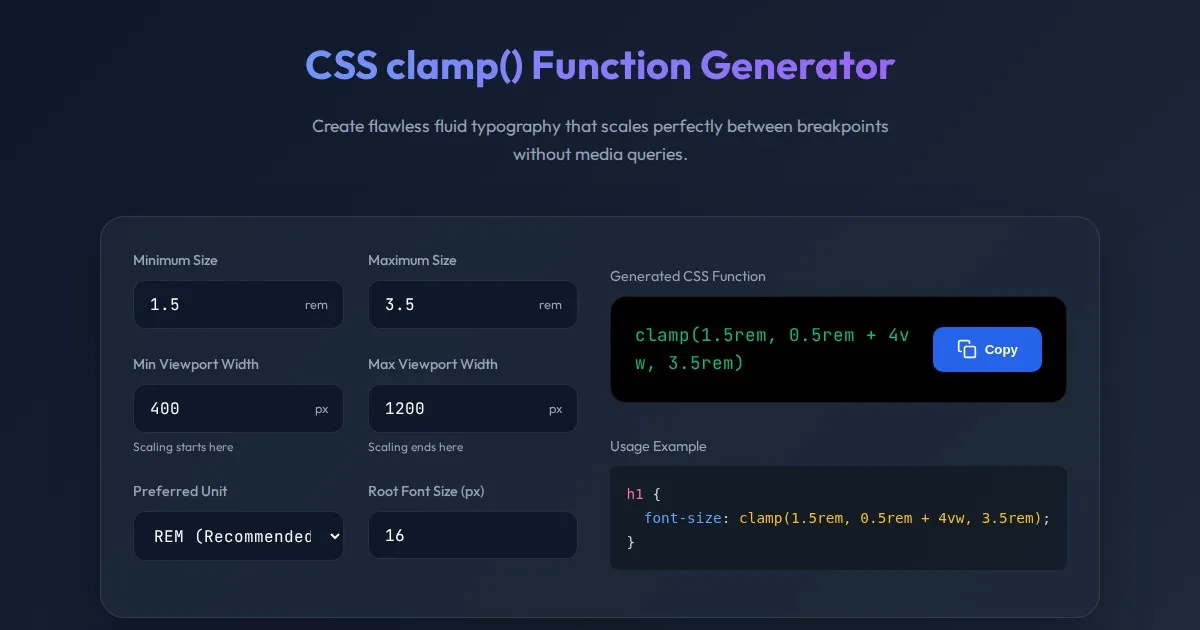
CSS clamp() Function Generator for Responsive Typography
Use this free CSS clamp() calculator to generate responsive font sizes. Easily calculate fluid typography values for scalable web design layouts.
Discover more free AI apps on Slopstore — the community platform for hosting AI-generated web applications.