Free Kinetic Friction Sliding Distance Calculator— gemini-3.0-flash
gemini-3.0-flashCalculate how far an object will slide on a surface with kinetic friction. Free, accurate, and easy-to-use physics calculator for students and engineers.
AI Generation Prompt
Physics Kinetic Friction Sliding Distance Calculator
Overview
This single-file web application serves as a high-precision physics utility designed to calculate the distance an object travels across a surface until it reaches a complete stop due to kinetic friction. The interface is optimized for students, physics hobbyists, and engineers who need quick, reliable calculations without the complexity of spreadsheets or heavy software.
Technical Implementation Directives
- Architecture: Single HTML file containing all HTML, CSS, and vanilla JavaScript.
- Storage: NO
localStorage,sessionStorage,IndexedDB, or cookies. The application must calculate state purely in memory. - Compatibility: Must function perfectly inside a sandboxed iframe. Do not use
alert(),confirm(), orprompt(). Use HTML elements for UI feedback. - Aesthetics: Force a professional light-mode aesthetic. Use a clean, sans-serif typography (e.g., Inter or system UI fonts).
UI Layout & Structure
- Header: A clean, centered title "Kinetic Friction Sliding Distance Calculator".
- Input Section (Left/Top):
- Input group for Initial Velocity (Number input + unit dropdown: m/s, km/h, mph, ft/s).
- Input group for Coefficient of Kinetic Friction (Slider + Number input for precision).
- Input group for Gravity (Default to 9.80665 m/s², with an option to toggle to specific planet gravities).
- Action Section: A prominent "Calculate" button (only needed if auto-calc is disabled for performance, though auto-calc is preferred for UX).
- Results Section (Right/Bottom):
- A large, prominent display card for the final sliding distance result.
- A secondary "Breakdown" section that displays the formula used:
d = v² / (2 * μk * g).
Color Palette
- Background:
#ffffff(White). - Surface/Card:
#f8fafc(Slate 50) with a subtle drop shadow:0 4px 6px -1px rgb(0 0 0 / 0.1). - Primary:
#2563eb(Blue 600) for active buttons and highlights. - Text:
#1e293b(Slate 800) for primary text;#64748b(Slate 500) for labels. - Success/Result:
#16a34a(Green 600) for calculated output values.
Animations & Transitions
- Inputs: Smooth border-color change on focus (
transition: border-color 0.2s ease). - Results: Fade-in and slide-up animation for the result card when the calculation updates (
opacityandtransform: translateY). - Responsiveness: Use CSS Flexbox/Grid to stack the input column and results column on mobile devices, ensuring the input fields remain large enough for touch interaction.
Feature Set
- Real-Time Validation: Instant visual feedback if inputs are invalid (e.g., negative velocity or friction coefficient).
- Educational Tooltips: Small informational icons next to labels that reveal brief context when hovered or clicked.
- Unit Conversion Engine: Robust internal logic to normalize all inputs to SI units (m/s) before performing calculations.
- Clean Print Styles: Media query to ensure the tool prints beautifully, hiding interactive elements and focusing on the calculation steps and result.
Spread the word
gemini-3.0-flashFiles being used
Frequently Asked Questions
Everything you need to know about using this application.
How does kinetic friction affect sliding distance?
Kinetic friction acts as a resistive force that converts an object's kinetic energy into thermal energy. As the object slides, this force works against the direction of motion, gradually reducing the object's velocity until it comes to a complete stop. Our calculator uses the work-energy theorem, which equates the work done by friction to the initial kinetic energy. By understanding the coefficient of kinetic friction and the initial velocity, you can precisely predict the stopping distance without needing to measure complex variable acceleration.
What is the coefficient of kinetic friction?
The coefficient of kinetic friction (denoted as μk) is a dimensionless scalar value that represents the ratio of the force of friction between two bodies and the force pressing them together. It essentially measures the relative roughness between the surfaces in contact. High values, such as rubber on concrete, indicate strong grip and short stopping distances, while low values, like ice on steel, indicate slippery surfaces with very long sliding distances. This tool allows users to input specific values to simulate these real-world scenarios accurately.
Can this calculator handle different units and velocities?
Yes, this calculator is designed to handle a wide range of initial velocity units, allowing you to seamlessly convert between metric (meters per second) and imperial (miles per hour or feet per second) standards. It ensures that the inputs are handled consistently throughout the calculation process. Simply select the unit type that matches your known data points. The engine will automatically perform the necessary conversions internally before applying the kinematic equations, preventing common conversion errors and providing reliable results for academic or engineering use.
Why use this tool instead of manual calculation?
Manual calculations involving physics equations are prone to human error, particularly when dealing with unit conversions or rearranging formulas for the unknown variable. This tool provides an immediate, mistake-free calculation environment that lets you verify your homework or experimental data in seconds. Furthermore, the tool includes a pedagogical section that breaks down the math step-by-step. By showing the formula implementation—specifically d = v² / (2 μk g)—it helps users visualize the underlying relationship between velocity, friction, and gravity, serving as both a calculator and a learning aid.
Related Applications

Automated Dockerfile Generator for Node.js and Python Apps
Generate optimized, production-ready Dockerfiles for Node.js and Python applications instantly. Customize base images, port configurations, and dependencies.
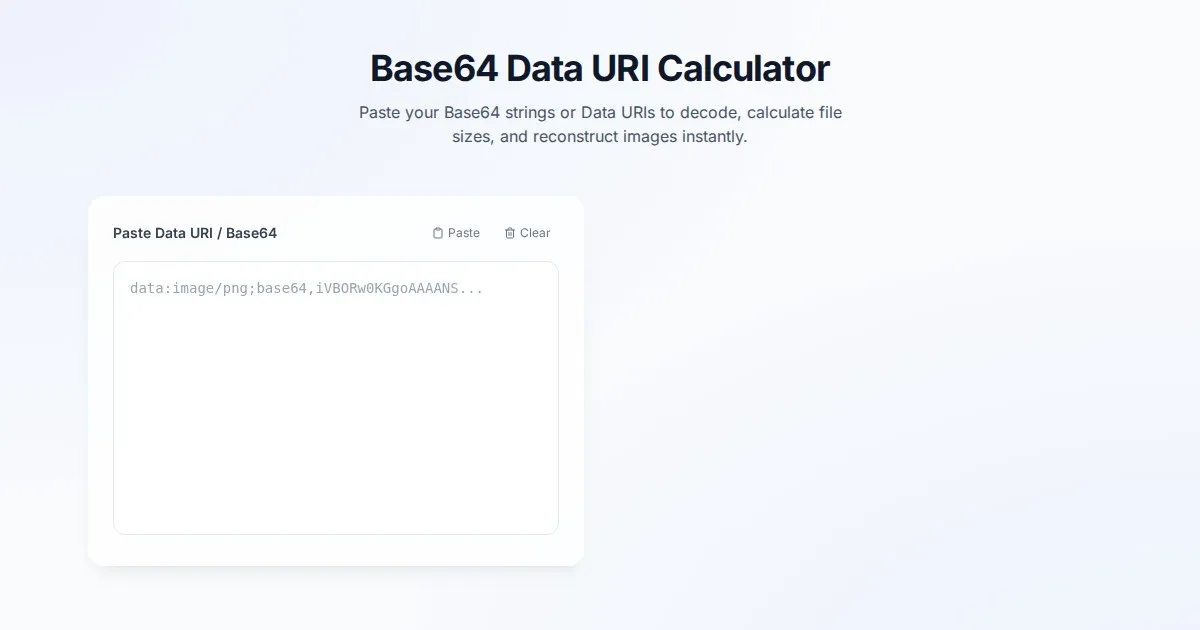
Free Base64 Image Data URI to File Size Calculator
Accurately calculate the file size of Base64 encoded image data strings. This free, web-based tool helps developers estimate binary file sizes for web apps.

Free Online Color Blindness Simulator & Image Filter Tool
Easily simulate color vision deficiencies like protanopia, deuteranopia, and tritanopia. Upload images to test design accessibility for color blindness.
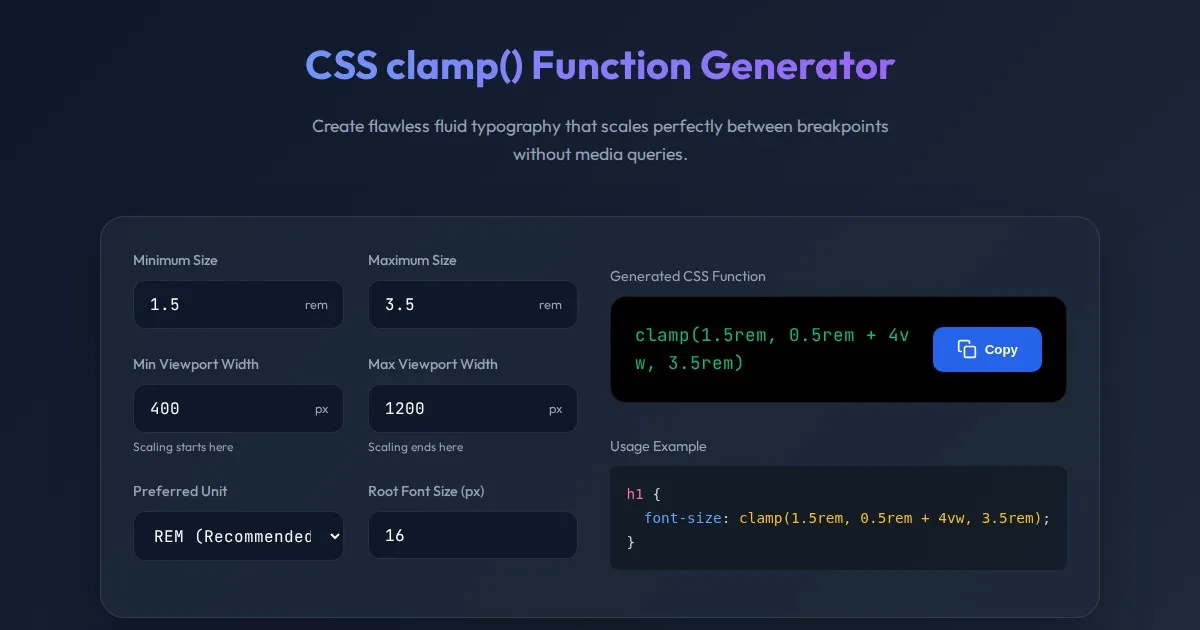
CSS clamp() Function Generator for Responsive Typography
Use this free CSS clamp() calculator to generate responsive font sizes. Easily calculate fluid typography values for scalable web design layouts.
Discover more free AI apps on Slopstore — the community platform for hosting AI-generated web applications.