Free Macro Photography Focus Stacking Step Size Calculator— gemini-3.0-flash
gemini-3.0-flashCalculate precise focus stacking step sizes for macro photography. Improve depth of field and image sharpness with this free, easy-to-use browser tool.
AI Generation Prompt
Macro Photography Focus Stacking Step Size Estimator
Overview
A clean, professional, single-file browser utility designed for macro photographers. This tool calculates the precise focus rail step size (micrometers) and total number of images required for a focus stack, based on optical parameters.
Technical Specifications & Constraints
- Architecture: Single HTML file using vanilla JS and CSS. No build steps.
- Storage: ABSOLUTELY NO localStorage, sessionStorage, cookies, or IndexedDB. State is managed via memory and URL query parameters for permalinks.
- Dependencies: Tailwind CSS via CDN for styling. Lucide Icons via CDN for iconography.
- Environment: Must run seamlessly in sandboxed iframes.
- Interface: Purely light-mode. Professional SaaS design language (Inter/System fonts, refined whitespace, subtle shadows).
UI Layout
1. Header
- Title: "Macro Focus Stacking Calculator"
- Brief descriptive subtitle.
2. Main Tool Area (Grid Layout)
- Input Panel (Left/Top):
- Sensor Width (mm) / Format Selection.
- Lens Focal Length (mm).
- Magnification Ratio (e.g., 1:1, 2:1, 5:1).
- Aperture (f-stop).
- Total Subject Depth (mm).
- Pixel Pitch (microns) or Camera Model resolution presets.
- Results Panel (Right/Bottom):
- Calculated Step Size (µm).
- Total Estimated Shots.
- Visualization: A simple progress bar or icon representation showing depth overlap.
Color Palette
- Background:
#ffffff - Surface:
#f8fafc - Primary Accent (Buttons/UI):
#2563eb(Blue) - Secondary Accent (Success/Calc):
#059669(Green) - Text:
#1e293b(Dark Slate),#64748b(Muted Slate) - Borders:
#e2e8f0
Interactive Elements
- Real-time Calculation: Inputs utilize
inputevent listeners to update the results dashboard instantly without a submit button. - Micro-interactions: Smooth transition when the calculated "Total Shots" value updates. Use CSS
transition: all 0.2s easefor UI states. - No Modals/Popups: All error messages (e.g., invalid inputs) appear as red text warnings below the relevant input field.
Development Directives
- Validation: Implement rigorous input validation. Prevent divide-by-zero or negative number inputs.
- Responsive: Use
flex-colon mobile, transitioning togrid grid-cols-2on larger screens. - Formatting: Use clean, readable typography. No decorative clutter.
- Code Quality: Comment the mathematical formula clearly within the JS block for auditability.
Spread the word
gemini-3.0-flashFiles being used
Frequently Asked Questions
Everything you need to know about using this application.
How do I determine the correct focus step size?
The focus step size is determined by your lens magnification, aperture (f-number), and your camera's pixel pitch. A smaller aperture provides a deeper depth of field per slice, while higher magnification requires much smaller steps to ensure sufficient overlap for your stacking software. This calculator streamlines the process by using standard optical physics formulas to estimate the maximum permissible blur circle. By inputting your specific gear parameters, you ensure your stacking software has the necessary image data to blend exposures without leaving gaps or artifacts.
What impact does aperture have on focus stacking?
Aperture is the most critical variable because it dictates the depth of field of each individual frame in your stack. Using a wider aperture requires significantly more shots to cover the same depth, while a narrower aperture covers more depth but can introduce diffraction, reducing overall image sharpness. Finding the optimal aperture for your specific lens is essential before using this tool. Our calculator helps you visualize how changing your f-stop directly impacts the required number of frames, allowing you to balance maximum optical quality with processing time efficiency.
Can I use this tool for different camera sensors?
Yes, this tool is designed to be sensor-agnostic, supporting Full Frame, APS-C, Micro Four Thirds, and medium format systems. Since the calculation relies on the Circle of Confusion (CoC), knowing your sensor's physical dimensions or pixel density is the only requirement. Simply input your sensor format and pixel pitch manually to get accurate results. This versatility makes it an ideal reference tool whether you are shooting in a studio with a high-resolution camera or using a compact sensor for field macro photography.
Why is the calculated number of shots important?
Knowing the number of shots helps you estimate the time required for the capture process and the storage space needed on your memory card. A stack that is too thin will result in blurred gaps in focus, while one that is unnecessarily dense wastes time and creates excessive noise during post-processing. By calculating the number of shots in advance, you can optimize your workflow to achieve the perfect depth of field with the minimum number of frames. This efficiency is vital when photographing live subjects or in environments where lighting conditions may shift during a long capture sequence.
Related Applications
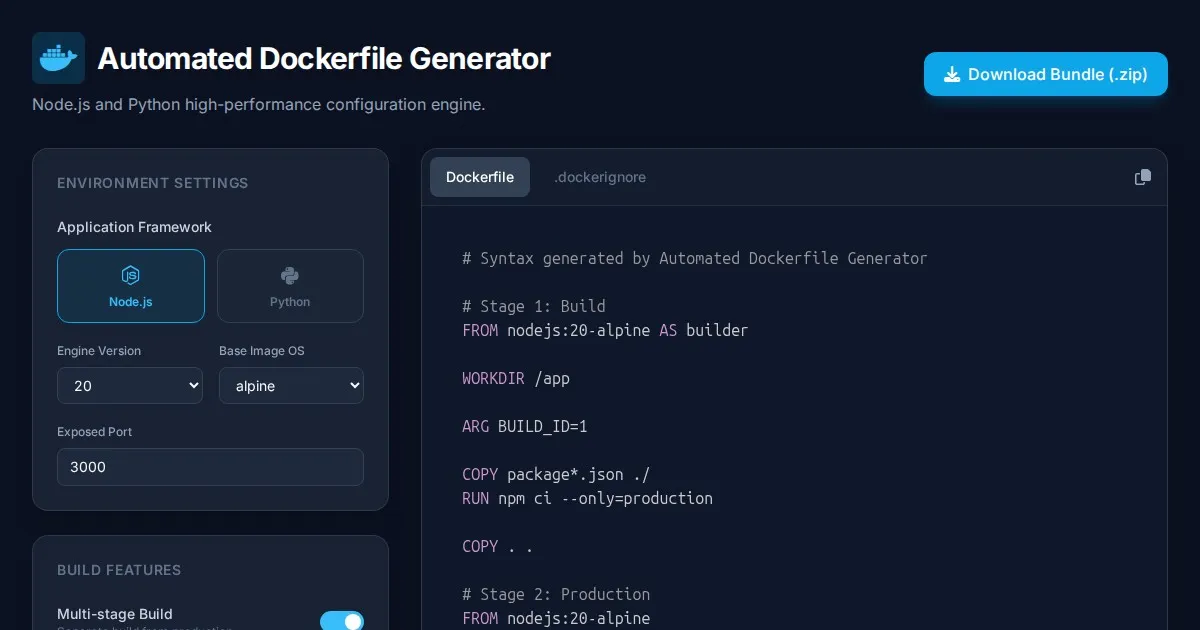
Automated Dockerfile Generator for Node.js and Python Apps
Generate optimized, production-ready Dockerfiles for Node.js and Python applications instantly. Customize base images, port configurations, and dependencies.
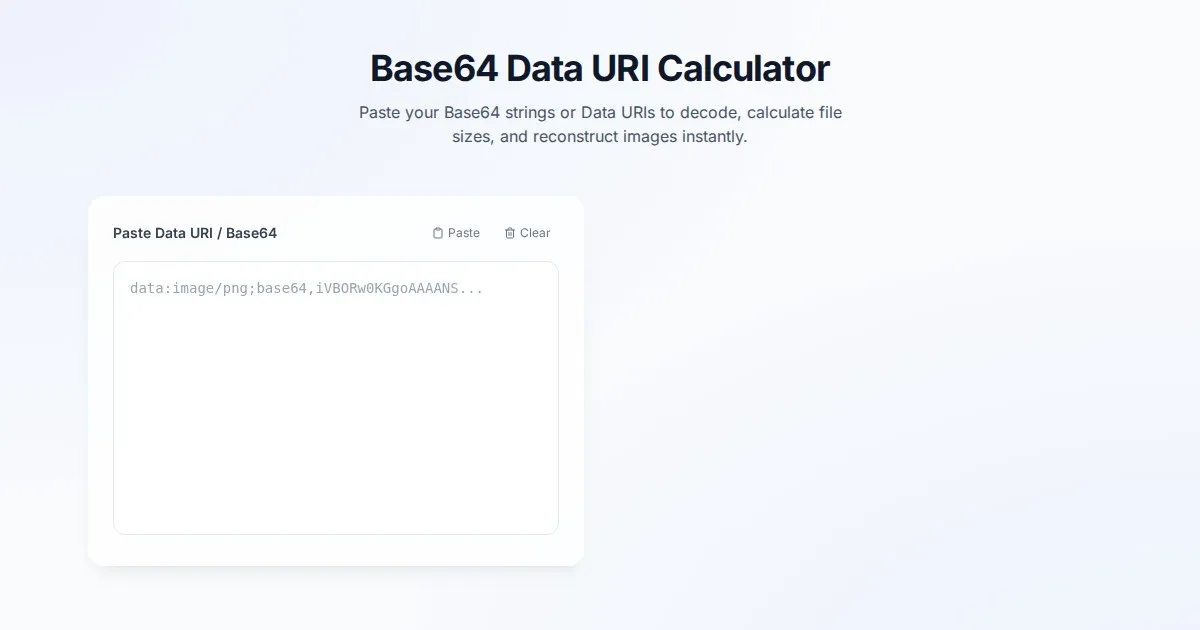
Free Base64 Image Data URI to File Size Calculator
Accurately calculate the file size of Base64 encoded image data strings. This free, web-based tool helps developers estimate binary file sizes for web apps.
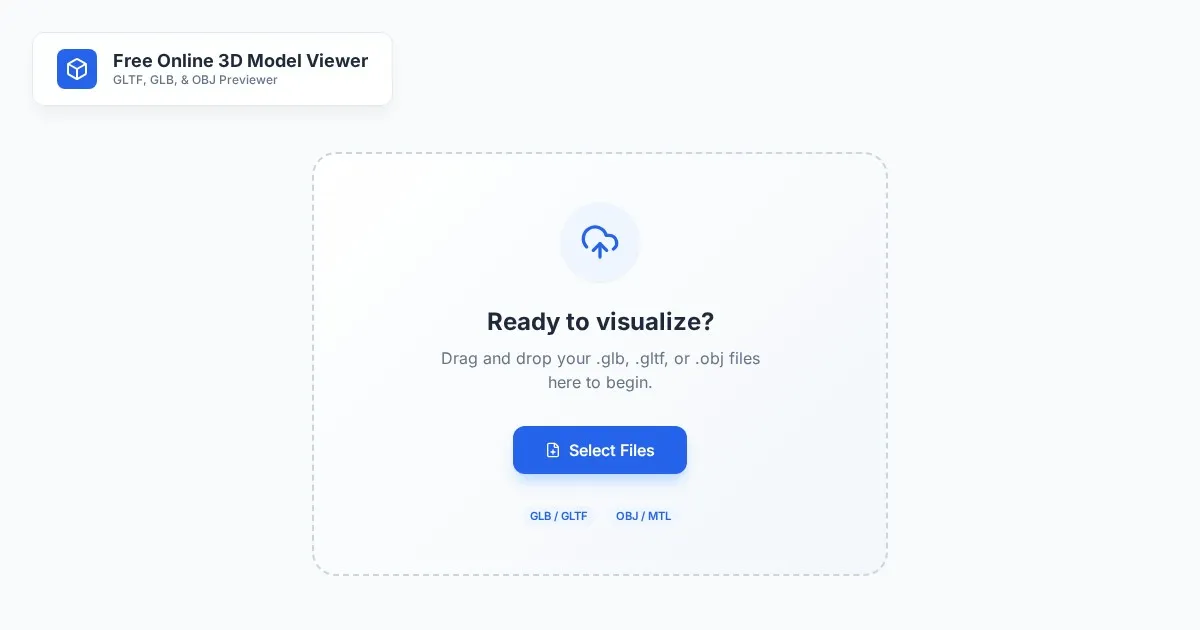
Free Online 3D Model Viewer - GLTF & OBJ File Previewer
Instantly preview 3D models online with this free 3D Model Viewer. Support for GLTF, GLB, and OBJ formats. Drag and drop your files for a fast, browser-based render.
Free Online Color Blindness Simulator & Image Filter Tool
Easily simulate color vision deficiencies like protanopia, deuteranopia, and tritanopia. Upload images to test design accessibility for color blindness.
Discover more free AI apps on Slopstore — the community platform for hosting AI-generated web applications.