Free Planet Retrograde Motion & Epicycle Simulator Tool— gemini-3.0-flash
gemini-3.0-flashVisualize retrograde motion with this free interactive epicycle simulator. Explore the Ptolemaic model and planetary movement with precision browser-based tools.
AI Generation Prompt
Free Astronomical Planet Retrograde Motion and Epicycle Simulator
Overview
A high-performance, browser-based educational tool designed to visualize the Ptolemaic epicycle model. This application allows users to simulate the apparent retrograde motion of planets by manipulating deferent and epicycle radii, orbital velocities, and center offsets. Built for high-fidelity performance, this tool provides real-time animation of planetary movement patterns.
Technical Requirements
- Architecture: Strictly single-file HTML/CSS/JS. No external framework dependencies.
- Storage: NO
localStorage,sessionStorage, or cookies. The app must handle all states in memory. - Compatibility: Must function within a sandboxed
<iframe>environment (no popups, no external tracking, no script access to parent window). - Performance: Must maintain 60fps for canvas animations during parameter changes.
- Responsiveness: Fully fluid layout using CSS Flexbox/Grid for various viewport sizes.
Feature List
- Dynamic Parameter Controls: Real-time sliders for:
Deferent Radius: Size of the primary orbit.Epicycle Radius: Size of the secondary circular motion.Deferent Velocity: Speed of the main revolution.Epicycle Velocity: Speed of the secondary revolution.
- Visualization Modes:
Real-time Tracking: Visualize the planet and the centers of both circles.Path Tracing: Option to draw the resulting path on the canvas (spirograph-style) to see the full retrograde loop.
- Simulation Controls:
Play/Pause/Reset: Standard media controls for the animation engine.Speed Modifier: Adjust the simulation playback speed without altering the geometric ratios.
- Information Overlay:
- Display current coordinate data and orbital position in a clean, unobtrusive sidebar.
UI Layout
- Header: Minimalist title bar with a brief instructional text.
- Main Tool Area:
- Left Sidebar (Controls): A vertically scrollable panel containing sliders, buttons, and switches with modern, pill-shaped UI components.
- Center/Right (Canvas Area): A large, clean workspace (HTML5 Canvas) occupying the remaining space. Background should be a subtle off-white or soft grey to prevent eye strain.
- No Footer: The page concludes naturally with the simulation area.
Color Palette & Aesthetic
- Design Language: Clean, vibrant, "SaaS" style. Professional and minimalist.
- Primary Background:
#FFFFFF(White) or#F8FAFC(Light Slate Grey). - Accent Colors:
#3B82F6(Blue) for active elements,#10B981(Emerald) for playback controls,#EF4444(Red) for planetary trajectory indicators. - Typography: Sans-serif, human-readable fonts (e.g., Inter, System-UI).
- Transitions: All UI interactions (sliders, toggles) must have 200ms
ease-in-outtransitions.
Interaction Design
- Animations: The canvas uses
requestAnimationFramefor smooth updates. - Micro-interactions: Hover effects on buttons with subtle drop shadows; sliders feature value-tracking labels that appear only when interacting.
- Responsiveness: On mobile, the control panel shifts from the sidebar to a bottom-sheet drawer or an overlay to maximize the canvas drawing space.
Spread the word
gemini-3.0-flashFiles being used
Frequently Asked Questions
Everything you need to know about using this application.
What is planetary retrograde motion?
Retrograde motion is an apparent change in the movement of a planet through the sky. While planets generally move eastward relative to the stars, they occasionally appear to stop, reverse direction, and then resume their original path. This phenomenon is an optical illusion caused by the differing orbital speeds of Earth and the other planets as they circle the Sun. In ancient astronomy, the Ptolemaic model was developed to explain this observation. Since the ancient model assumed a geocentric universe where everything revolved around the Earth, astronomers used the concept of epicycles—small circles upon which planets moved—to account for these complex observational paths.
How do epicycles work in this simulator?
This simulator uses the mathematical concept of epicycles, where a planet revolves on a smaller circle (the epicycle) whose center simultaneously revolves around a larger circle (the deferent) centered on the Earth. By adjusting the radii and rotational speeds of both the deferent and the epicycle, you can visualize the classic 'looping' or 'zig-zag' patterns that ancient astronomers used to model the heavens. Manipulating these variables in real-time allows you to see how changes in relative velocity or size affect the resulting planetary path. It acts as an interactive bridge between historical astronomical models and modern geometric understanding, making complex mechanics intuitive and visually accessible.
Can I save my simulation settings?
This application operates as a pure, single-file, client-side utility and does not utilize any persistent storage, cookies, or databases. Consequently, you cannot save your configurations within the browser's storage, as this app is designed to run in a strictly sandboxed environment to ensure user privacy and compatibility. Because the application is stateless by design, refreshing the page will reset the simulation to its default parameters. We recommend taking screenshots of your favorite configurations or noting down the specific radius and velocity values if you wish to replicate a specific orbital model in future sessions.
Is this tool suitable for educational demonstrations?
Yes, this tool is specifically engineered for educators, students, and astronomy enthusiasts who need a reliable, high-performance visual aid for classroom demonstrations or personal study. The interface is optimized to be clean, distraction-free, and highly responsive, allowing for quick adjustments during a presentation to show how varying parameters alter the resulting path. The application is built using standard web technologies like HTML5 Canvas and vanilla JavaScript, ensuring that it works consistently across all modern web browsers without requiring plugins or complex software installations. It provides a lightweight, high-fidelity experience that is perfect for explaining the geometry behind historical planetary theories.
Related Applications

Free Base64 Image Data URI to File Size Calculator
Accurately calculate the file size of Base64 encoded image data strings. This free, web-based tool helps developers estimate binary file sizes for web apps.
Free Online 3D Model Viewer - GLTF & OBJ File Previewer
Instantly preview 3D models online with this free 3D Model Viewer. Support for GLTF, GLB, and OBJ formats. Drag and drop your files for a fast, browser-based render.
Free Online Color Blindness Simulator & Image Filter Tool
Easily simulate color vision deficiencies like protanopia, deuteranopia, and tritanopia. Upload images to test design accessibility for color blindness.
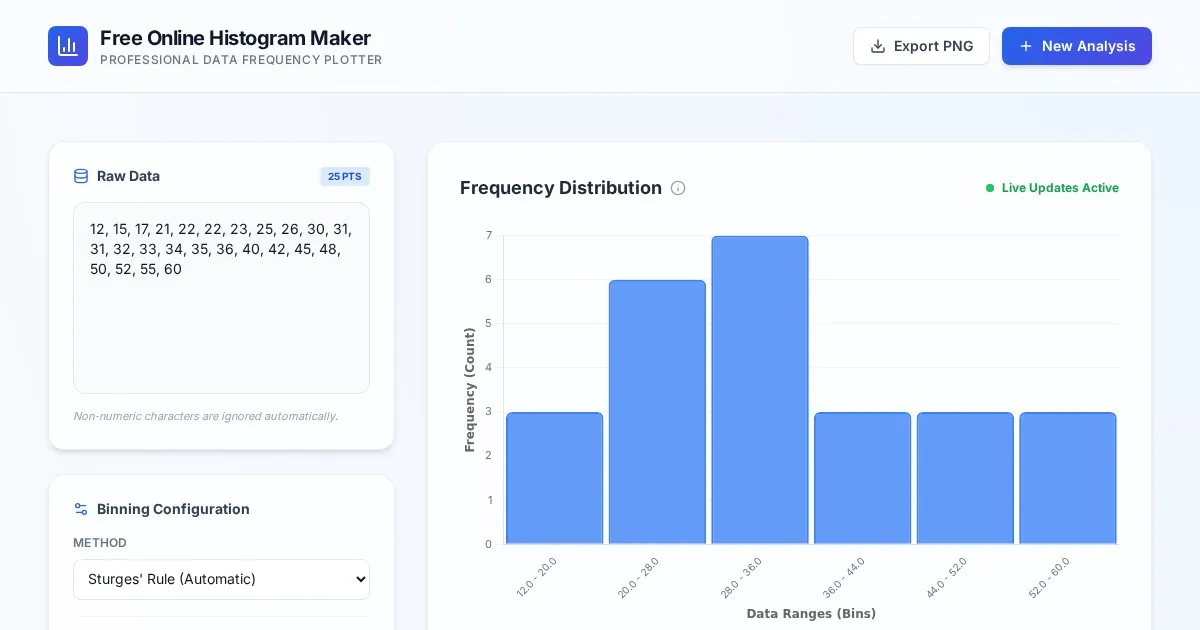
Free Online Histogram Maker & Data Frequency Plotter
Easily create professional histograms from your numeric data. Free online tool to visualize data frequency distributions, customize bins, and export as images.
Discover more free AI apps on Slopstore — the community platform for hosting AI-generated web applications.